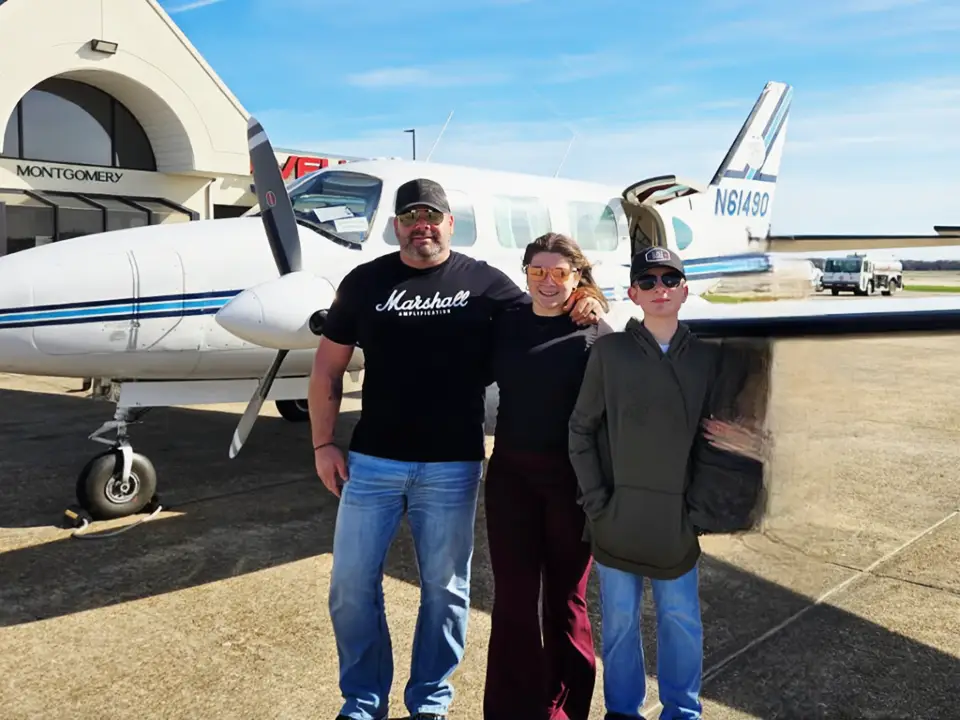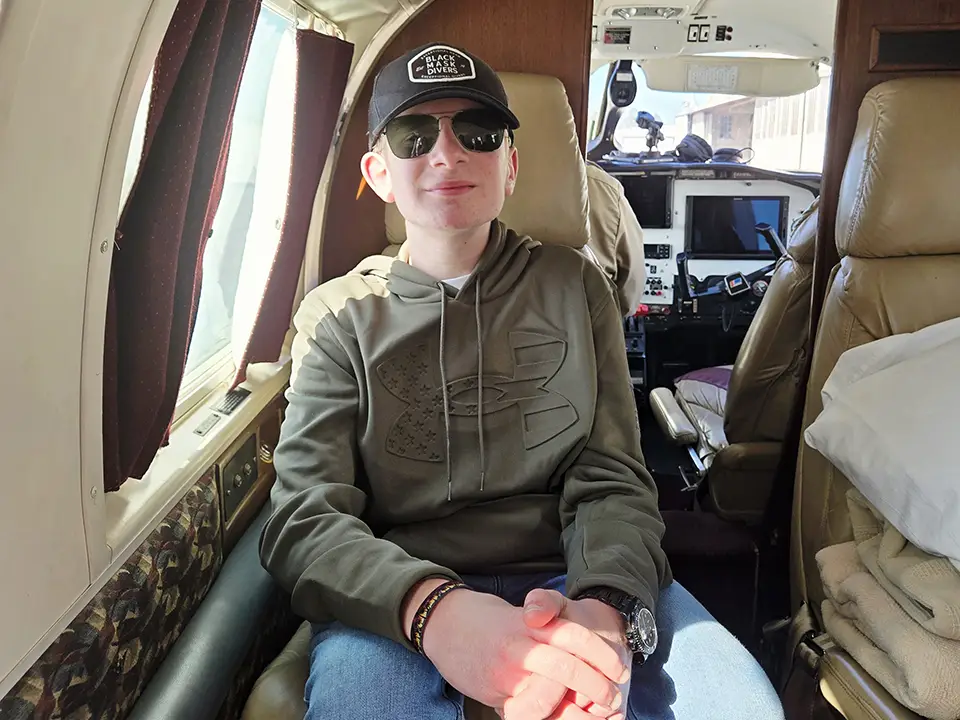
Thirteen-year-old Austin was diagnosed with hypotonia, which is a weakness of the muscles, and severe pediatric scoliosis as an infant. Since then, his mom, Kristi, estimates that he has had more than 60 spinal surgeries.
The family, who lives outside of Montgomery, Ala., began Austin’s treatment at Children’s of Alabama in Birmingham before inserting traditional growing rods in his spine which required surgical adjustments every few months. Finally, they consulted with an orthopedic surgeon at Children’s Hospital of Atlanta at Emory University who inserted growing rods which could be magnetically controlled without repeat surgeries. But Austin’s spine continued to cave in on itself.
“It got to the point where he couldn’t breathe well and he wasn’t eating, so we knew spinal fusion was coming,” said Kristi.
The family was told that spinal fusion would be the last step when Austin had stopped growing at 18 or 19 years of age.
“But in Austin’s case, he was 12 years old when we had no other options,” said Kristi.
So the orthopedic surgeon at Emory referred Austin to Shriners Children’s St. Louis for halo-gravity traction, which reduces spinal curvature by attaching a metal ring (halo) to the skull and using weights to lift the head.
“Austin’s case was so severe that he had up to 43 pounds hanging from his head 24 hours a day,” said Kristi.
This increased his oxygen intake by up to 60%.
“It was the first time we’ve ever seen him eat good, and he was putting on weight and growing,” she said.
After about six weeks in traction, Austin endured an 11-hour spinal fusion surgery that left him with 24 screws, four hooks and two titanium rods. When he returned to Shriners in November 2025, the doctors told him he needed a second spinal fusion on the lower part of his spine. Reluctant togive up his last bit of mobility, Austin decided to continue physical therapy — and delay getting another spinal fusion surgery for as long as possible.
“We are just praying for a miracle that would mean not having another fusion,” said Kristi.
From a punishing drive to a quick flight
Before they learned about Wings of Hope, Austin and his family had been making the 584-mile, one-way drive from their home to St. Louis.
“It was horrible on Austin’s back,” said Kristi. “Austin’s a fighter. He will never let you know he’s hurting — and he has the best, most positive attitude. But when we drive, it’s tears just rolling down his face.”
Austin made his first Wings of Hope flight in January 2026 — turning what was a grueling 11-hour drive into a 3-1/2-hour trip. This means less school missed for Austin. It also relieves the family of the expense of traveling and the wear-and-tear they had been putting on their older cars.
“It has been such a miracle,” said Kristi. “Words cannot express the gratitude that we have for what Wings of Hope does for our family — and what it means for us to not drive and the physical toll that goes along with that.”
Austin will continue physical therapy — twice a day, every day. And he will keep working with his physical therapy team at Shriners, returning to St. Louis every few months, until his doctors determine that another surgery is needed. No matter how many trips it takes, Wings of Hope will continue to fly Austin to Shriners.
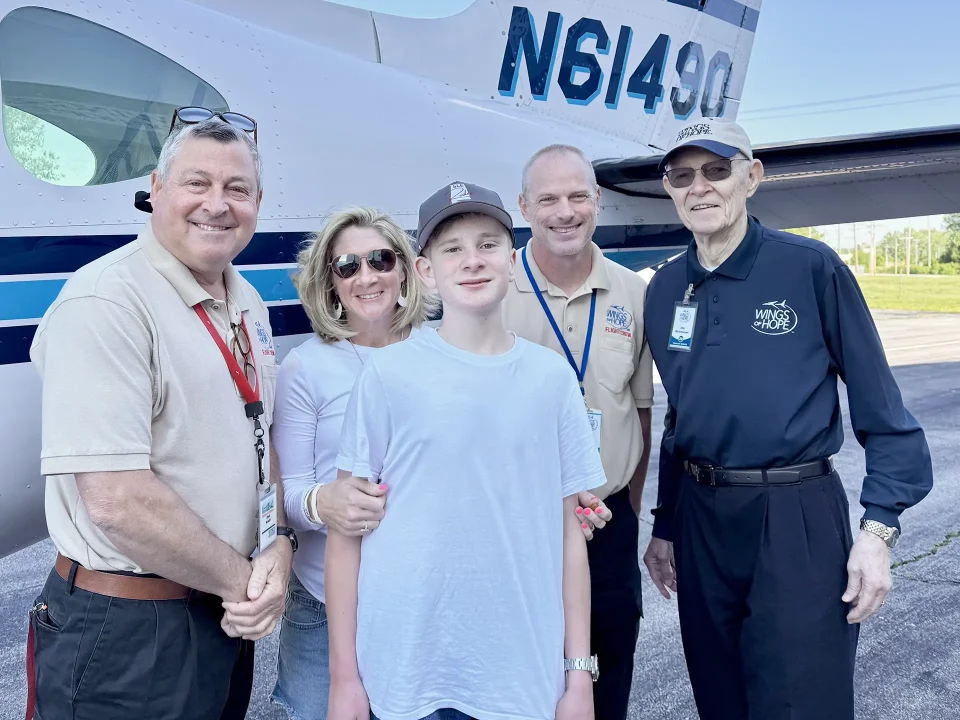
Kristi gets emotional when she talks about “the angels we have met through Wings of Hope.”
“It’s not just the pilots, but everybody involved. They have a heart for it, and they’re so loving and compassionate. That’s why I wrote this poem. I just needed to somehow express our gratitude — and it’s never going to be enough — but these people are angels and people need to know that.”
Excerpt from “Wings of Hope,” a poem by Kristi Cochran
The heroes behind the scenes
The ones who give their time
To prepare the airplanes, coordinate the schedules,
And work not for a dime.
The amount of preparation, the funding to make it run
Thank you will never be enough
To express all that they have done.
They treat us like we are royal
When they are the admirable beings
Skilled, compassionate, and loving
Humility that is worth seeing.
Every person that they employ
Has a set of angel wings
Whether pilot, nurse, or driver
Each play a role in the HOPE they bring.
So from now on when you look in the sky
And see a spark of white
Just know it might be Wings of Hope
Blessing another family with a flight.